Four days to dress twenty people
A wardrobe stylist turns the brief into clothes for every person in the frame: plans them, finds them inside the budget, dresses people on set, watches every shot and returns every piece afterwards. On my last video shoot I had four days to do that for more than twenty people.
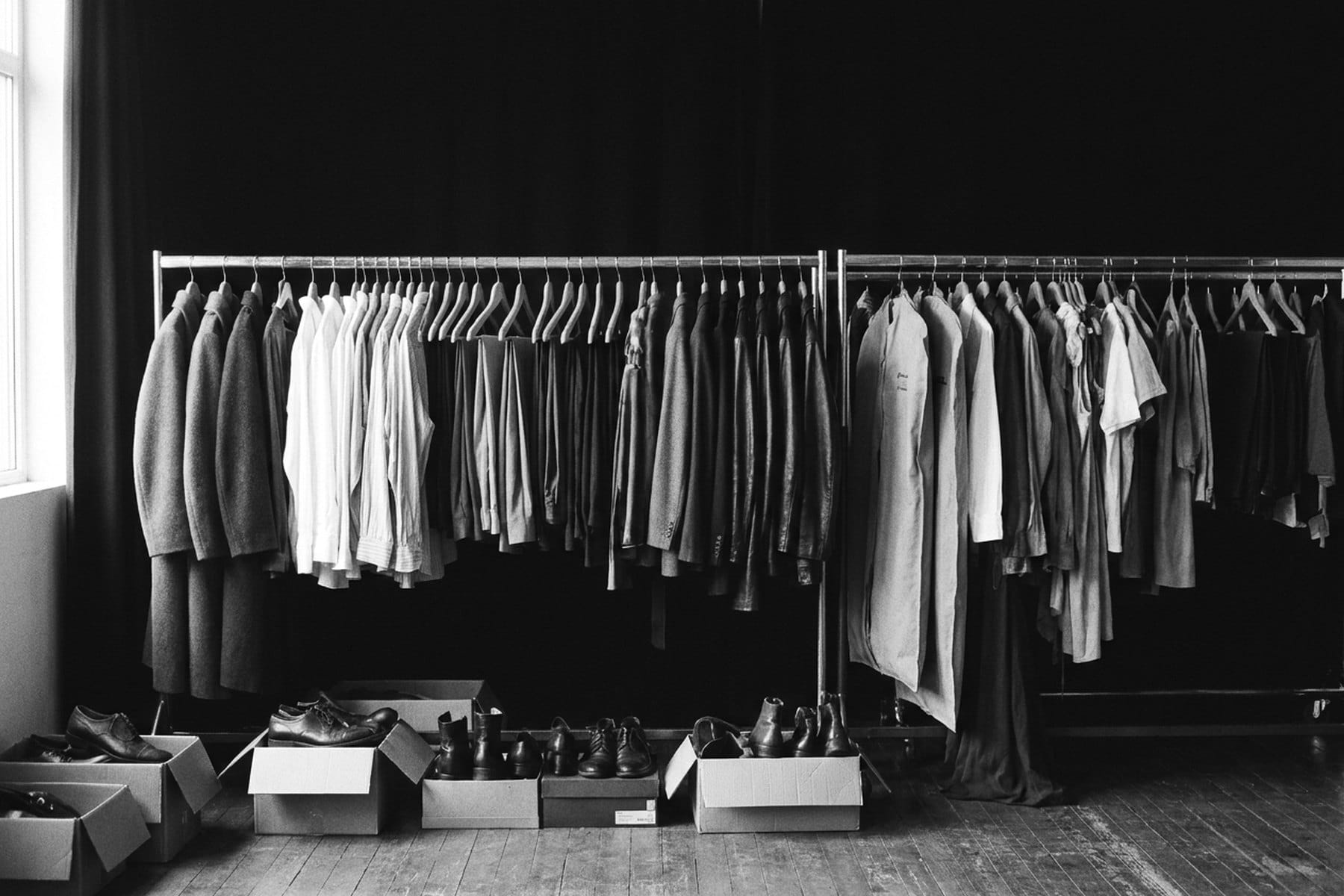
Most people think a wardrobe stylist picks nice clothes. That is the smallest part of the job.
On my last video shoot there were main characters in costumes and twenty extras. I had four days to prepare all of them. This is what the work actually was.
First the brief, then a day of planning
It starts with the brief and a general meeting with the team. Then, before I buy or borrow anything, I spend at least one day only on planning.
I need all the details first. Then I put them in order: what I do first, what second, where I find each thing, and how it all fits into the budget without going over it.
From that comes the real plan: what I get first, and who I talk to first, so nothing is too late. With a deadline, the order matters more than anything.
Time is the expensive part
When there is time, I can order calmly, choose well and have everything ready before the day. When there are four days for more than twenty people, there is no calm. Every decision has to be right the first time.
On this job the clothes came from a high-street shop, a costume rental house, a costume shop and things I ordered. Each of them also gets its own return at the end.
Usually there is no fitting
On most of my jobs there is no fitting. It happens only when the budget is very big, because everyone who comes to a fitting has to be paid.
So the first time I see the clothes on the people is on the shoot day. That changes how I buy. I do not buy one perfect piece per person. I buy the smallest amount of clothes that can still save me in different situations: two sizes of the same thing, a similar piece from another collection, a plan B for every plan A.
These are not models in sample sizes. They are real people with very different bodies. And sometimes two of them have to look like they have the same build.
On this shoot, that thinking saved the day. I wrote about it in Five bomber jackets, just in case.
On set I watch the whole frame
On the day I change people’s clothes and shoes all the time. But one person is never one picture. They are in this shot, then in other shots, next to other people. I have to think how everyone works together in each frame: the composition, the colours, the styles.
This time there were many people in a big hangar. I placed them all, and then we looked at the colours together. Where to add a jacket, where a hat, who to change.
With main characters it is stricter. If they are police officers, the costumes must match perfectly, in style and in colour.
Clothes also touch the other departments. An outfit can change the light, affect the set, or matter for how the camera zooms. When I see a risk like that, I take it to the director before it becomes a problem.
The clothes are my responsibility
Most of the responsibility for the clothes sits with me. I cannot say at the end: “You ruined half of it, the shop did not take it back.” I also cannot come with “there is a small stain, now it costs you 70 euros” when the budget is fixed.
On this job the director told me at the start: if something is really damaged, the production compensates. That is the right way, and it should be agreed before the shoot, not after. But even then, my job on set is to keep the damage as small as possible. So I watch what happens in the frame, not only how it looks.
Then the returns
By the end of the shoot day I had about 40 hours in this job, plus driving. And it was not finished. The next day I sort everything and take it back: to the high-street shop, and to the costume house separately.
If you are booking a wardrobe stylist
Give as much time as you can. Four days for twenty people can be done, but there is no room for a second try. With more time I can order calmly and choose well.
Agree before the shoot who pays if something gets damaged.
And let your stylist plan before buying. The planning day at the start is not lost time. It is what makes the other days work.
If you have a shoot coming, send me the brief and the date. I will tell you what the time allows.
Questions people ask
What does a wardrobe stylist do?
They plan and find the clothes for everyone in the frame within the budget, dress people and watch every shot on set, and return every piece after the shoot.
Is there always a fitting before a shoot?
No. On most of my jobs there is none, because everyone who comes to a fitting has to be paid. So I plan backup pieces instead.
Who pays if clothes get damaged on set?
Agree it before the shoot. On my last job the production agreed at the start to compensate anything really damaged. My job on set was to keep the damage as small as possible.
How much time does a wardrobe stylist need to prepare?
As much as you can give. With time I can order calmly and choose well. With four days for twenty people, every decision has to be right the first time.
Planning a shoot? I book at least 30 days ahead.
Enquire